
Existing reference or custom sample?
Ask which physical references are available. A custom sample is made to the agreed structure and artwork; confirm whether its print and finish match the planned bulk method.
Use a six-SKU skincare range as a planning example. Compare shared carton sizes, individual artwork quantities and finish choices before confirming the launch order.
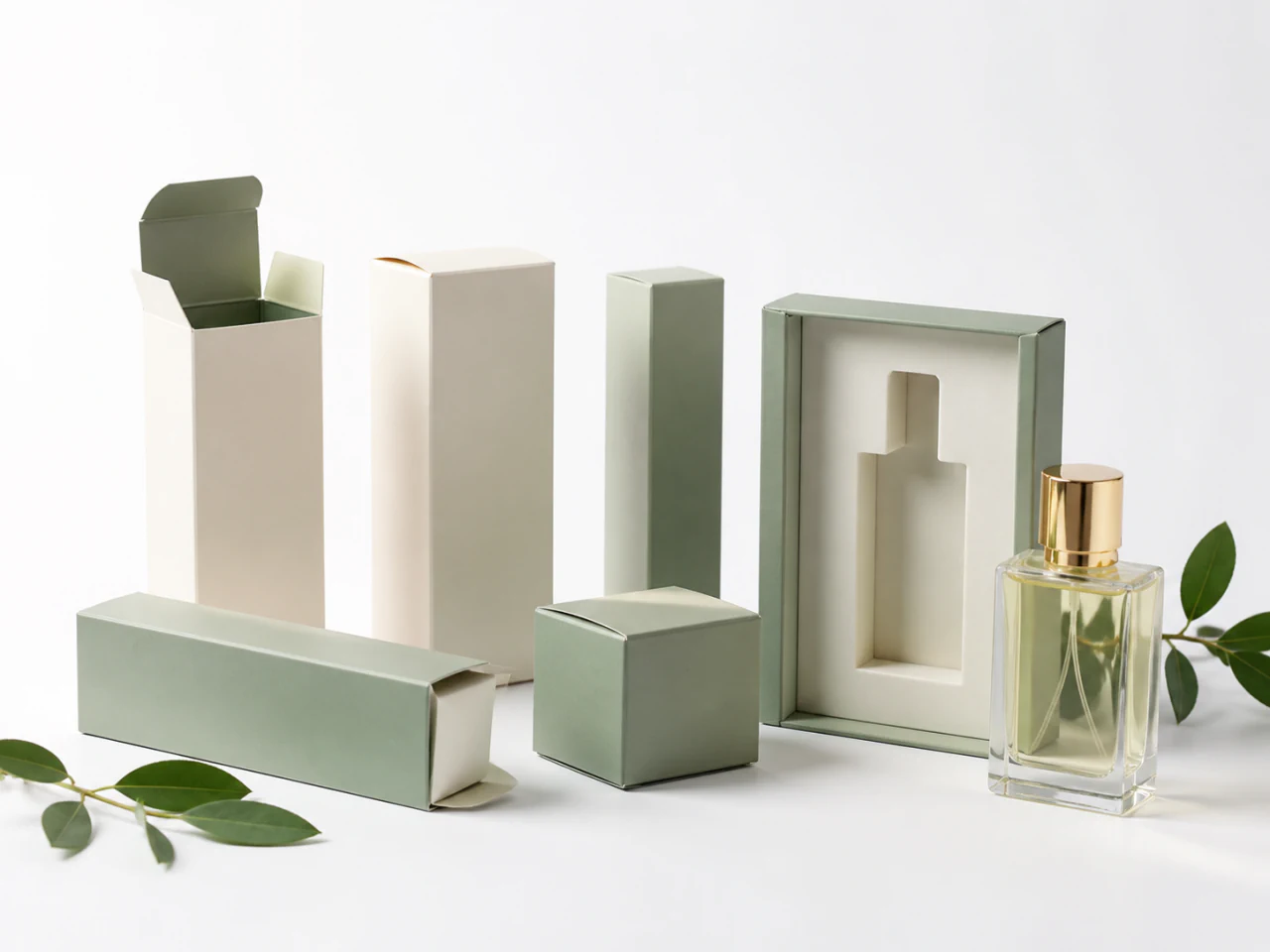
Use these inputs to compare feasible structures and quote the same scope.
| Decision point | Practical guidance | Impact |
|---|---|---|
| SKU dimensions | List each bottle, jar or tube including its cap, pump and protective sleeve. | Group products by actual packed dimensions; use separate inserts where needed. |
| Carton and quantity plan | Compare shared outer sizes and list the quantity for every artwork. | Folding cartons start at 500 pieces per design. Six artworks do not automatically qualify as one combined print run. |
| Paper and finish | Compare paper grade, coating and embossing against the launch budget. | Request documents for any agreed sourcing claim and approve the finish on a physical reference. |
| Artwork panels | Reserve buyer-approved product text, barcode and variable batch or date areas. | Check text size, panel alignment and barcode scanning across the range. |
| Reorder reference | Retain the approved sample, color reference, paper specification and artwork version. | Review any material or artwork changes before a repeat run. |
This is a hypothetical planning example. Dimensions, quantities and possible sample issues below are illustrative inputs, not a completed customer order or measured inspection result.
| Planning input | Illustrative brief | What to confirm |
|---|---|---|
| Serum pair | Two artworks for a 30 ml bottle assumed to measure 38 × 38 × 112 mm; trial carton about 44 × 44 × 120 mm. | Check usable internal space with the actual pump, cap and any tamper band. |
| Cream pair | Two artworks for a 50 ml jar assumed to be 58 mm in diameter and 45 mm high; trial carton about 64 × 64 × 52 mm. | Confirm jar clearance, board thickness and closure behavior on a white sample. |
| Cleanser pair | Two artworks for a tube assumed to measure 42 × 30 × 145 mm; trial carton about 48 × 36 × 152 mm. | Check the tube seam and cap, plus insertion and removal during packing. |
| Quantity plan | 500 cartons per artwork, six artworks and 3,000 cartons in total. | Three shared dielines can simplify structure planning; each artwork still has its own quantity and print setup. |
Use these conditional examples to prepare a revision list. Record actual findings, revised drawings and signed approval before placing a production order.
| Possible issue | Proposed revision | Approval check |
|---|---|---|
| If the serum pump touches the top flap | Recheck the full packed height and revise the carton or support; keep glue and folds clear of the pump. | Trial-pack both serum SKUs and confirm closure without product pressure. |
| If logos look inconsistent across sizes | Agree a common reference position and proof the three dielines together before printing. | Compare all six artwork proofs and retain a signed color and finish reference. |
| If two SKU cartons are mixed during packing | Add clear SKU identification to the artwork approval and master-carton plan. | Check the barcode on the actual printed sample and verify separation against the packing list. |
Review your actual product in the sample before approving bulk production.
An initial review is free. Physical samples, tooling and freight are quoted after the structure and destination are known.
Ask which physical references are available. A custom sample is made to the agreed structure and artwork; confirm whether its print and finish match the planned bulk method.
Confirm sample quantity, artwork or dieline work, finish tooling and courier cost separately. Any sample-fee credit toward a bulk order must be agreed in the quote.
Plan about 7 days for sampling after structure and artwork confirmation, then about 20 days for production after sample approval. Revisions and special processes can change the schedule.
Confirm destination postcode, shipment method, carton volume and whether duties or taxes are included. The published 30–40-day total is a planning estimate; the quote should state its start date and delivery assumptions.
Custom Cosmetic Boxes
Compare carton and rigid-box options, quantities per SKU and artwork requirements for your beauty range.