
Existing reference or custom sample?
Ask which physical references are available. A custom sample is made to the agreed structure and artwork; confirm whether its print and finish match the planned bulk method.
Plan a fragrance discovery set around the actual vials, removal access and shipment route. The drawer-box route below is a planning example to adapt to your project.
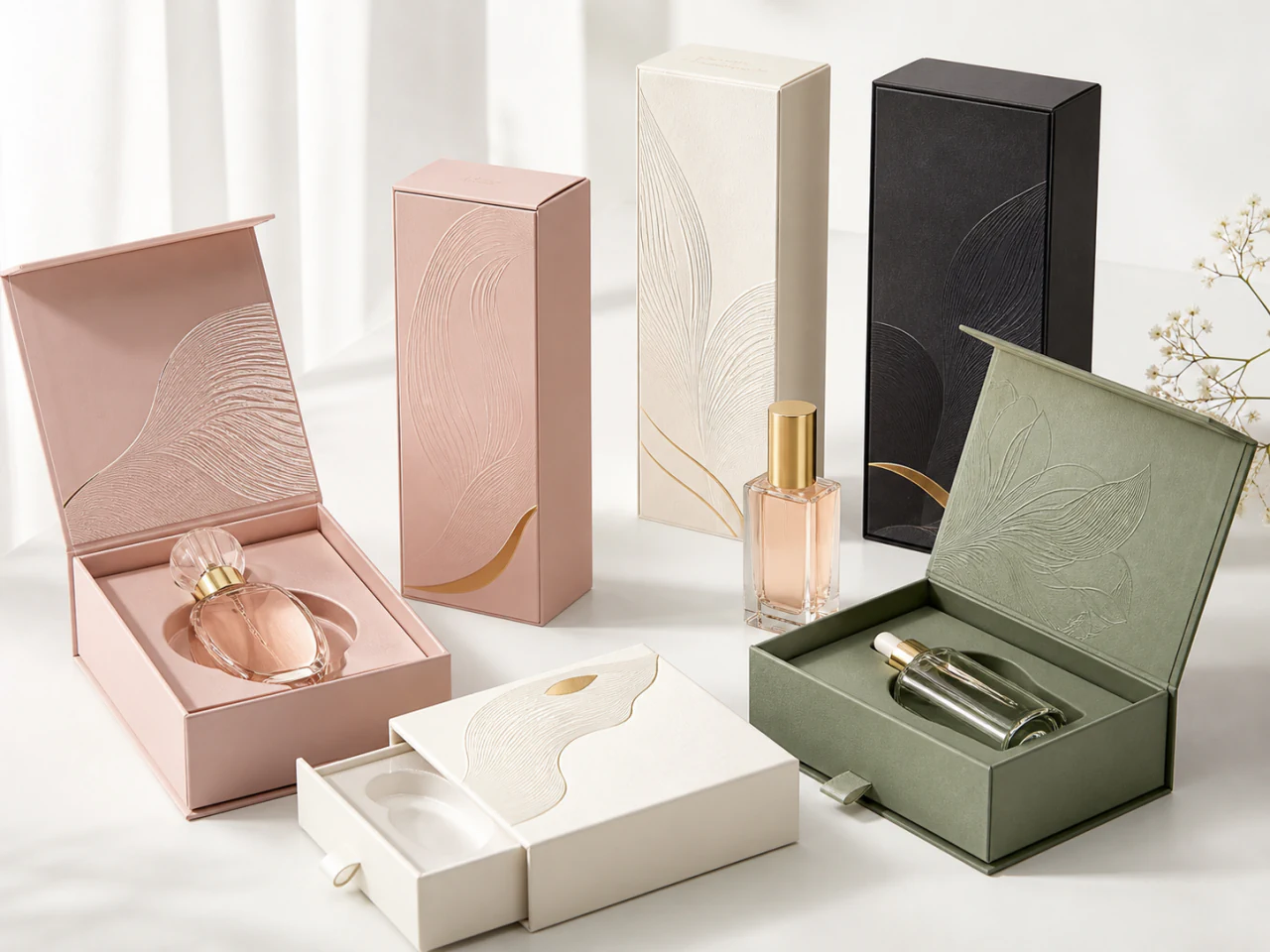
Use these inputs to compare feasible structures and quote the same scope.
| Decision point | Practical guidance | Impact |
|---|---|---|
| Vial layout | List vial count, diameter, full height including cap and filled weight. | Set cavity spacing and the usable box depth before selecting an outer size. |
| Outer structure | Compare a rigid drawer box with a lift-off lid or folding-carton alternative. | All structures start at 500 pieces per design. Quote quantities per design for your project. |
| Insert material | Compare an EVA insert with a paperboard route; review pulp separately if requested. | Check vial retention, cap clearance and finger access on the fitted sample. |
| Information and artwork | Plan scent names, a notes card, barcode space and any launch insert. | Approve artwork placement and small-text readability on the final dieline. |
| Shipment | Review the retail box with the intended outer carton and destination. | Confirm packing volume and any required transport test with the actual packed sample. |
This is a hypothetical planning example. Dimensions, quantities and possible sample issues below are illustrative inputs, not a completed customer order or measured inspection result.
| Planning input | Illustrative brief | What to confirm |
|---|---|---|
| Product assumption | Six 2 ml vials, each assumed to be 12 mm in diameter and 60 mm long including its cap. | Use the actual filled vial drawing or physical set before designing cavities. |
| Starting box concept | A rigid drawer box, approximately 160 × 100 × 30 mm externally, with the vials lying flat in parallel. | These are starting dimensions for a fit study, not an approved dieline or production specification. |
| Quantity and artwork | An illustrative order of 1,000 boxes with one outer artwork and one printed scent card. | Compare an EVA insert and a folded-paperboard alternative as separate quote options. |
| Sample scope | One fitted structure trial followed by a printed and finished approval sample. | Quote revisions, finish tooling and sample freight separately; confirm the sample method. |
Use these conditional examples to prepare a revision list. Record actual findings, revised drawings and signed approval before placing a production order.
| Possible issue | Proposed revision | Approval check |
|---|---|---|
| If a vial moves in the trial insert | Measure the actual bottle body and revise the retention points; keep pressure away from the sprayer and cap. | Refit all six filled vials and agree the movement and removal checks before approval. |
| If a vial is difficult to remove | Add finger access or revise the cavity depth without losing bottle support. | Try removal from every cavity with the intended user and check for rubbing on labels. |
| If the drawer rubs the foil logo | Move the foil area away from the contact edge or revise the drawer clearance. | Review the opening action and finish on the approval sample, then agree the shipping test separately. |
Review your actual product in the sample before approving bulk production.
An initial review is free. Physical samples, tooling and freight are quoted after the structure and destination are known.
Ask which physical references are available. A custom sample is made to the agreed structure and artwork; confirm whether its print and finish match the planned bulk method.
Confirm sample quantity, artwork or dieline work, finish tooling and courier cost separately. Any sample-fee credit toward a bulk order must be agreed in the quote.
Plan about 7 days for sampling after structure and artwork confirmation, then about 20 days for production after sample approval. Revisions and special processes can change the schedule.
Confirm destination postcode, shipment method, carton volume and whether duties or taxes are included. The published 30–40-day total is a planning estimate; the quote should state its start date and delivery assumptions.
Custom Perfume Boxes
Compare bottle fit, insert options, box structures and quantities for your fragrance project.